

How Saffiano Leather is Made: The Manufacturing Process

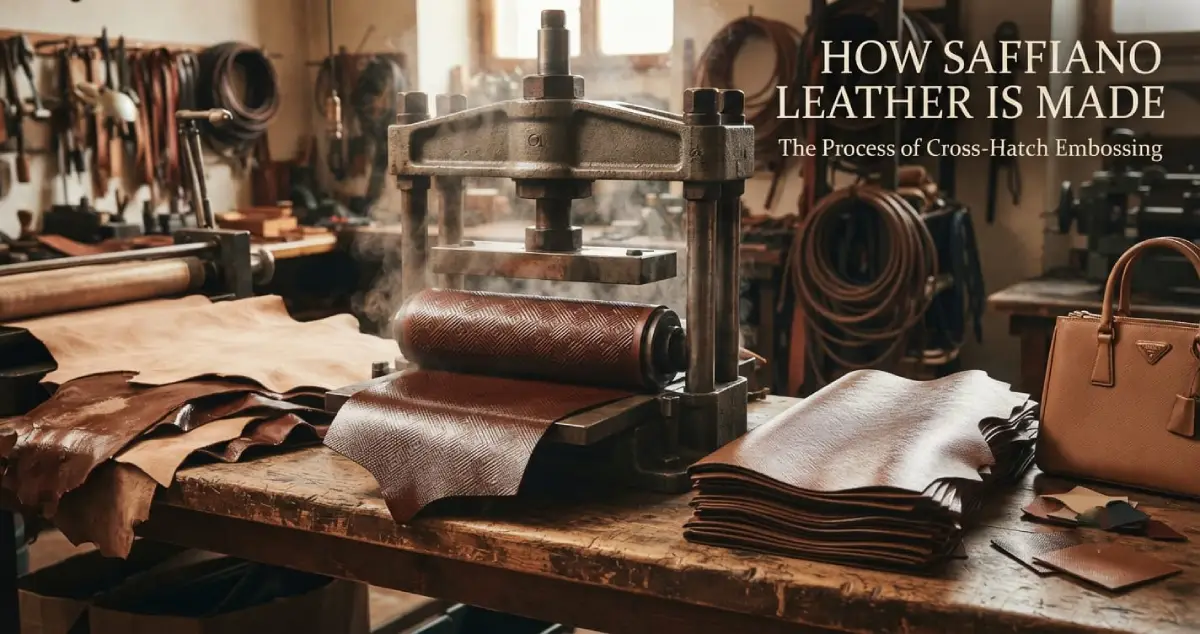
When people hear about Saffiano leather, the first things that come to mind are its elegant look, premium feel, and impressive scratch resistance. But what many people don’t realize is that these qualities aren’t naturally found in the leather. They’re the result of a very precise manufacturing process, where every step plays a big role in the final product’s quality. In this article, we’ll walk through how Saffiano leather is made, step by step from choosing the raw leather to creating the famous crosshatch pattern and applying the protective coating that gives it its signature look.
Step 1: Selecting High-Quality Leather
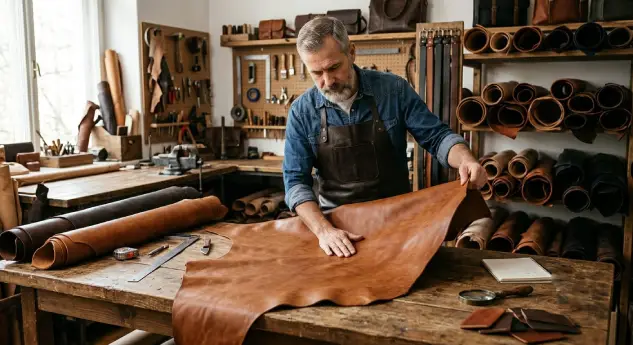
If the quality of Saffiano leather is judged by how clear the pattern looks, how well it resists scratches, and how well it keeps its shape over the years, all of that is decided long before the leather reaches the embossing machine.
When it comes to how Saffiano leather is made, choosing the leather isn’t just about how it looks. It’s also about how well it can handle every manufacturing step that follows. One of the first things manufacturers check is the internal fiber structure. The leather needs to be strong enough to handle heat and pressure without losing its flexibility or developing tiny surface cracks.
Leather with loose or uneven fibers often ends up with an inconsistent embossed pattern. Over time, some areas may start to look less defined than others. On the other hand, leather with dense, tightly packed fibers keeps the pattern even across the entire surface, even after years of regular use.
That’s why most high-quality Saffiano products start with either Top-Grain Leather or Full-Grain Leather. The choice depends on the final product. Small wallets, handbags, and luxury accessories all have different needs when it comes to flexibility and firmness, so not every Saffiano item is made from the same type of leather.
Before production begins, every piece of leather is carefully inspected. Manufacturers check that the thickness is consistent, the surface is stable, and there are no weak spots or stretch marks that could affect the embossing process. Even the leather’s moisture level matters, since leather that’s too dry or too damp can react differently when it’s pressed.
Step 2: Tanning the Leather
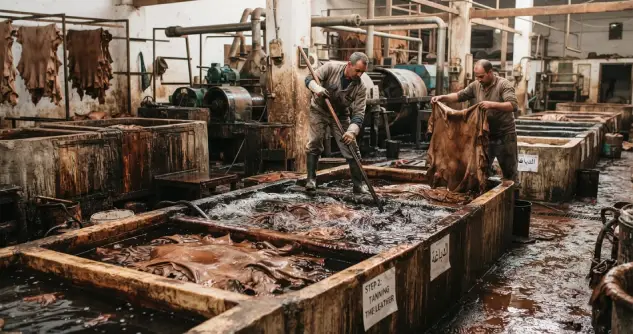
Once the right leather has been selected, the tanning process begins. This is the stage that turns raw animal hide into a stable material that can handle all the manufacturing steps that come next. In fact, if the tanning isn’t done properly, the problems will become obvious during the production of Saffiano leather. The leather has to withstand high heat, heavy pressure, and detailed finishing without losing its flexibility or changing its shape.
- The process starts by thoroughly cleaning the leather to remove any natural residue. or oils that could prevent the tanning agents from penetrating the fibers evenly.
- The hides are then placed in large rotating drums filled with tanning solutions. As the drums spin, the tanning agents work their way deep into the leather fibers. changing their structure and making the leather stronger and more stable.
For most modern Saffiano leather products, chrome tanning is the preferred method. It creates leather that’s flexible, dimensionally stable, and able to handle the heat and pressure used to emboss the signature crosshatch pattern without cracking or losing its strength.
Vegetable tanning, on the other hand, uses natural plant extracts and takes much longer to complete. It gives the leather a more natural look and allows it to develop a unique patina over time. That’s why it’s often chosen for premium products that focus on a more traditional style.
Once the tanning process is complete, the leather doesn’t move straight to embossing. First, its moisture level is carefully adjusted, then it goes through a conditioning process that redistributes the natural oils throughout the fibers. If the leather is too dry, it may crack during embossing. If it’s too damp, the crosshatch pattern won’t stay as sharp after it’s pressed.
Step 3: Applying the Signature Crosshatch Pattern
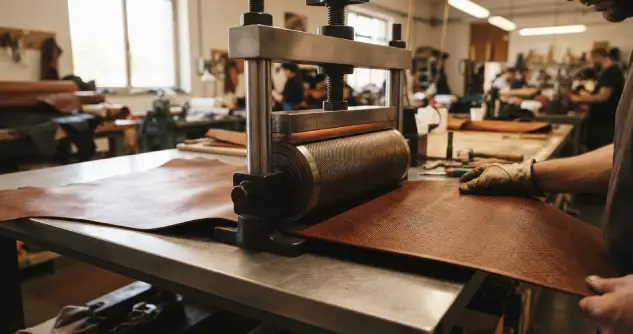
If there’s one step that truly sets Saffiano leather apart from other types of leather, it’s the creation of the signature crosshatch pattern. This isn’t just a decorative finish it’s a carefully controlled process that gives the leather its unique texture and character.
After the leather has been tanned and its moisture and flexibility are properly balanced, it’s fed into a heat embossing machine. The machine uses a metal plate engraved with the famous crosshatch design. By applying heat and pressure at the same time, the pattern is permanently pressed into the leather without cutting or damaging the fibers.
The goal isn’t simply to stamp a design onto the surface. The pressure actually reshapes the top layer of the leather, creating a fine network of raised and recessed lines. This textured surface helps reduce direct contact with the leather, which is why light scratches that are usually easy to notice on smooth leather are much less visible on Saffiano leather.
Getting this step right requires the perfect balance of temperature, pressure, and pressing time. If the heat is too low, the pattern won’t be deep or permanent enough. If the pressure is too high, the leather can lose some of its natural flexibility or show signs of surface stress. That’s why experienced manufacturers see embossing as much more than simply pressing a pattern into the leather. It’s a carefully calibrated process that ensures the texture is sharp and consistent across the entire piece.
Once the embossing is complete, the leather is left to cool and stabilize before moving on to the finishing stage. This allows the pattern to fully settle into the fibers, helping it stay crisp and well-defined even after years of everyday use.
Step 4: Adding the Protective Wax Finish
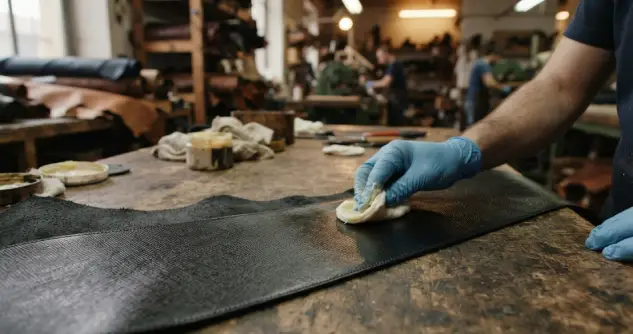
Once the signature crosshatch pattern has been fully embossed into the leather, the finishing stage begins. During this step, a thin protective layer of wax or sometimes a blend of wax and special resins is applied to the surface. The purpose isn’t to make the leather shinier or more attractive. Its main job is to protect the textured surface created during the previous stage.
The protective coating is spread evenly across the leather, covering the surface without filling in the fine details of the crosshatch pattern. If the coating is too thick, the texture can lose its definition. If it’s too thin, the leather won’t have the level of protection needed for everyday use. That’s why controlling the thickness of this finish is one of the most important parts of the Saffiano leather manufacturing process.
Once applied, the coating forms a thin barrier that helps protect the leather from water, oils, dust, and everyday stains. Instead of soaking into the fibers right away, liquids stay on the surface long enough to be wiped away before they leave a permanent mark.
This protective layer also reduces direct friction against the leather, which is one of the reasons Saffiano leather hides light scratches and signs of daily wear better than many other types of natural leather. It also helps preserve the sharpness of the crosshatch pattern by protecting the fine edges created during the embossing process from gradual wear.
That’s why, when talking about how Saffiano leather is made, the protective finish isn’t just the final step it’s an essential part of what gives the leather its signature durability and performance.
Step 5: Cutting and Crafting Luxury Products
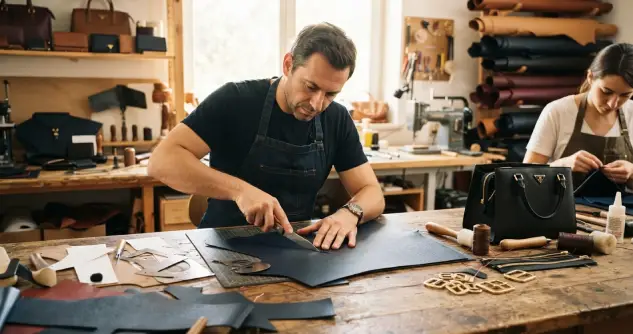
Once the leather has gone through every stage of the manufacturing process, it’s finally ready to be turned into a finished product. While many people think this stage is just about cutting and stitching, it’s actually one of the most demanding parts of the process. A single mistake here can undo the quality achieved in all the previous steps.
The first step is creating a cutting pattern for each product, whether it’s a handbag, wallet, card holder, or belt. The leather isn’t cut randomly. Every piece is carefully planned to make the best use of the strongest sections of the hide while avoiding any areas that could affect the product’s appearance or durability.
With Saffiano leather products, the direction of the signature crosshatch pattern is just as important. Before cutting begins, manufacturers make sure the pattern runs in the same direction across every piece of the product. If different sections are cut at different angles, the mismatch becomes easy to notice, and that’s often one of the first signs that separates a luxury product from a lower-quality one.
After the leather is cut, the assembly and stitching process begins. Strong, durable threads and precision sewing machines are used to keep the stitches straight and evenly spaced. In premium handbags and wallets, even the exact points where the stitching starts and ends are carefully planned, since even a small misalignment can create uneven tension on the leather over time.
Before the finished product leaves the factory, it goes through a thorough quality control inspection. The pattern alignment, stitching accuracy, leather edges, and overall finish are all checked carefully. If even a small flaw is found, the product is usually repaired or rejected before it ever reaches the customer.
Common Misconceptions About Saffiano Leather Manufacturing
Even though Saffiano leather is well known, there are still plenty of misconceptions about how it’s made. Some of them are far from the truth.
1. Saffiano leather is synthetic leather.
One of the most common myths is that Saffiano leather is fake because of its uniform texture and precise pattern. In reality, genuine Saffiano leather starts as real leather, usually Top-Grain or Full-Grain leather. What makes it look different isn’t the material itself it’s the manufacturing process used to create its signature finish.
2. The crosshatch pattern is drawn or carved by hand.
Another common misunderstanding is that the pattern is added manually after the leather is finished. In fact, the signature crosshatch texture is created during the heat embossing process. A heated metal plate is pressed into the leather under carefully controlled heat and pressure, making the pattern a permanent part of the leather rather than just a surface decoration.
3. The wax coating is there to hide flaws.
Many people believe the protective wax or resin layer is used to cover imperfections in the leather. That’s not the case with high-quality Saffiano leather. The leather is carefully inspected before it even reaches the finishing stage, and any pieces with obvious defects are removed. The protective coating is there to shield the surface, reduce moisture and stain absorption, preserve the texture, and help the product last longer with everyday use.
4. All Saffiano leather products are made the same way.
Just because two products are labeled as Saffiano leather doesn’t mean they’re made to the same standard. The final quality depends on several factors, including the quality of the raw leather, the tanning process, the precision of the embossing, and the type of protective finish that’s used. That’s why two products with the same name can feel very different in terms of durability, texture, and how long they last.
Final Thoughts
Once you understand how Saffiano leather is made, it’s easy to see why it has become one of the most popular choices for luxury leather goods. Every step of the manufacturing process from selecting the right leather to the final protective finish is designed to create a product that combines elegance, durability, and everyday practicality. If you’d like to learn more about Saffiano leather, including its key features, advantages, disadvantages, and the best ways it’s used, be sure to read our main guide, What Is Saffiano Leather? It covers everything you need to know and completes the full picture.
FAQs
Yes. In most cases, Saffiano leather is made from genuine leather, usually Top-Grain or Full-Grain leather. What makes it unique isn’t the type of leather, but the signature crosshatch pattern and the protective finish applied during manufacturing. However, some lower-priced products may use synthetic materials that look similar.
The process starts with selecting high-quality natural leather, followed by tanning to strengthen and stabilize the hide. The signature crosshatch pattern is then created using heat embossing, after which a protective wax or resin coating is applied. Finally, the leather is cut, stitched, and crafted into luxury products.
Most genuine Saffiano leather products are made from cowhide.
because it offers the right balance of strength, durability, and flexibility for the manufacturing process. However, some luxury brands may use other types of natural leather depending on the product and design.