

What Is Saffiano Leather? The Most Durable Luxury Leather

The word “Saffiano” sells millions of wallets every year, yet most buyers couldn’t tell genuine quality from a cheap imitation. Most wallets buyers encounter Saffiano leather when shopping for a branded wallet for men or a structured bag, but they can’t explain what separates genuine Saffiano from the dozens of products that use the name without the material quality behind it. That gap in knowledge costs money. This guide covers everything about Saffiano leather and how to identify genuine quality before you buy.
The History and Origin of Saffiano Leather
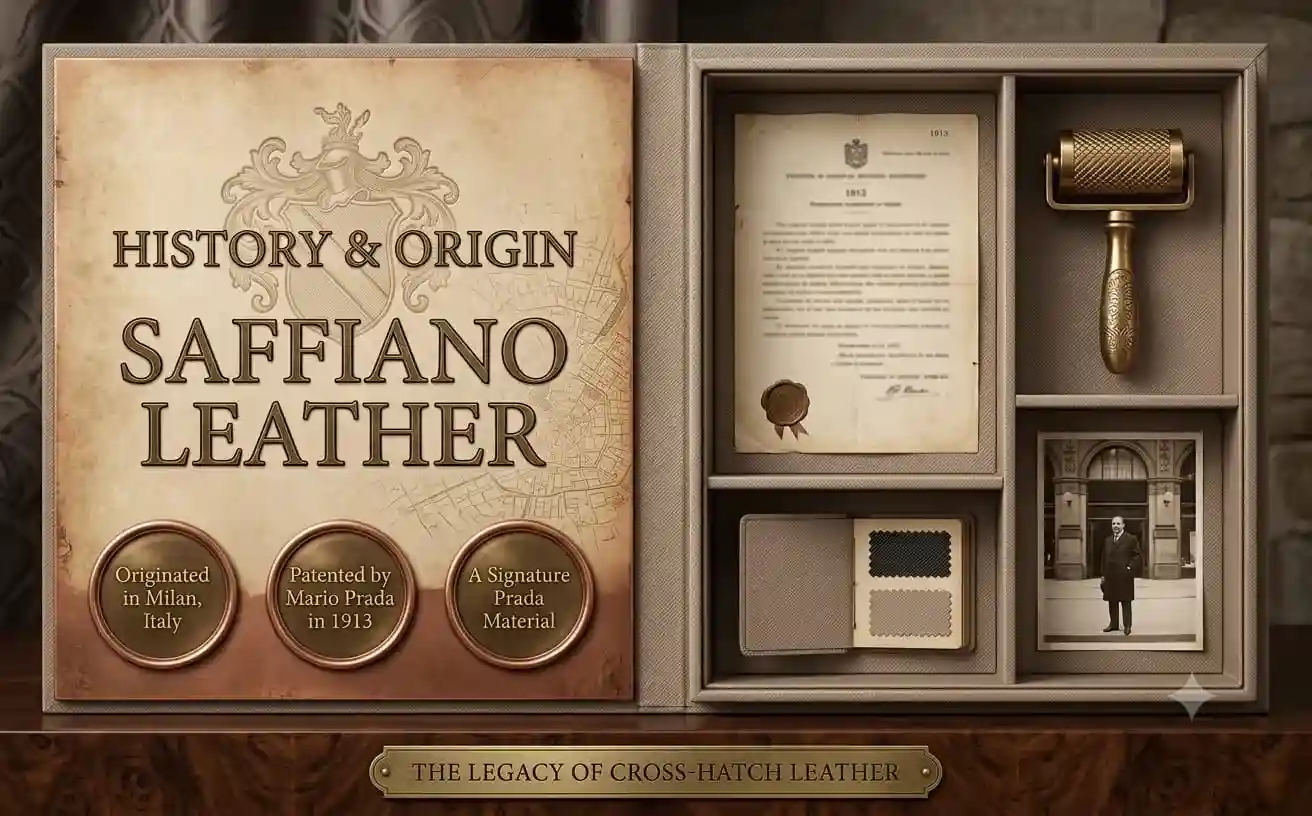
To meet this demand, Prada partnered with a Milan tannery and developed a crosshatch stamping technique applied to premium calfskin. He patented it the same year. The patent gave Prada exclusive production rights for approximately 20 years. After it expired around 1933, any manufacturer could use the technique.
The success of Saffiano leather was immediate. By 1919, Prada had become the official supplier to the Italian Royal Family, an honour reflected in the royal coat of arms still present in the brand’s logo today.
After the patent expired, the Saffiano finish spread globally. Today the name refers to the finish and process, not to any single brand. Quality varies significantly depending on the base hide used underneath. You can learn more about the origins of this iconic leather in our detailed guide on the history and origin of Saffiano leather.
What Is Saffiano Leather Made Of?
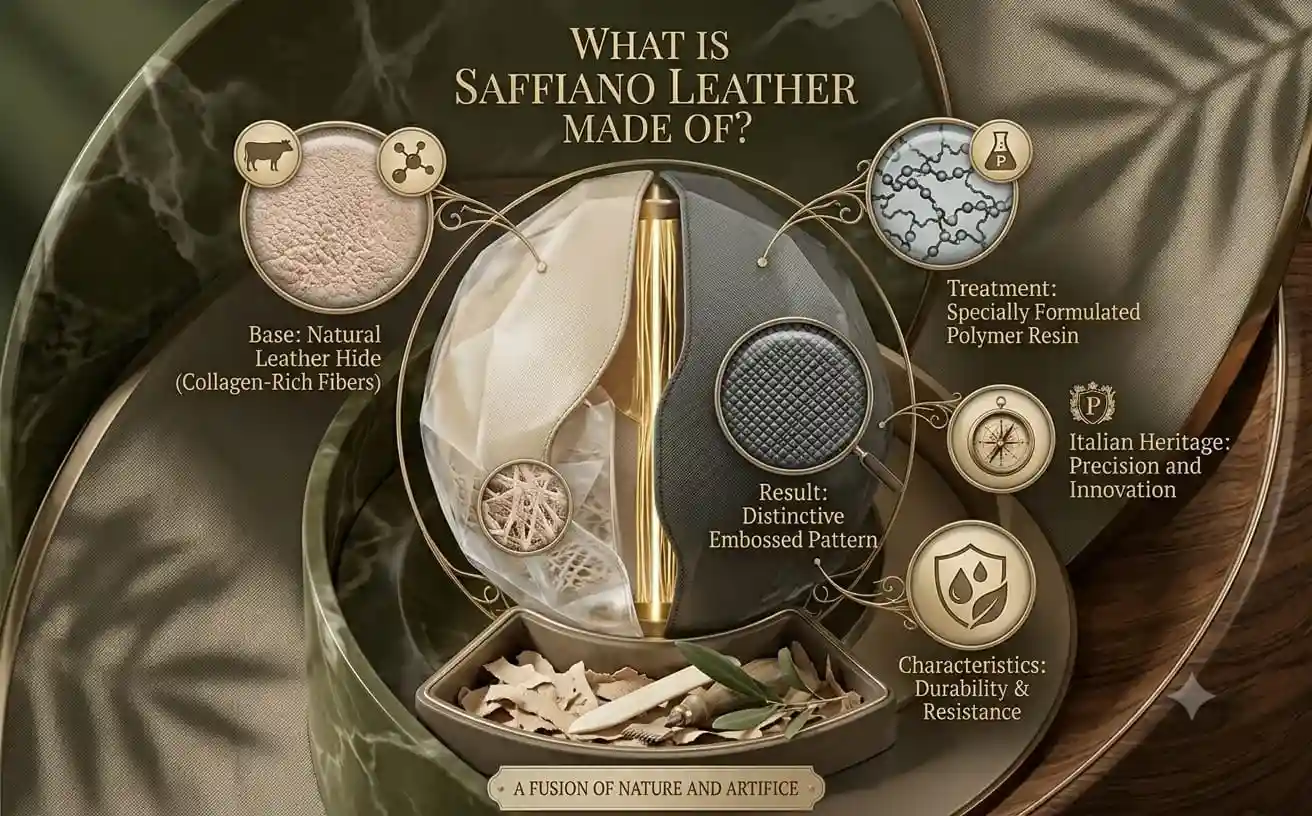
Understanding what is Saffiano leather at a material level starts with one key fact: Saffiano is not a type of hide. It is a finishing process applied to leather. The base material underneath the crosshatch can be any of the following:
- Full-grain calfskin is the highest quality base. The grain is tight, strong, and uniform. Used by top-tier manufacturers who want the finish to last for years without degradation.
- Top-grain leather is the second layer of the hide, sanded to remove imperfections. Used widely across mid-range products. Less durable than full-grain over extended use.
- Split leather with PVC or PU coating is a lower-grade base with a plastic layer bonded to the surface before stamping. The Saffiano pattern is pressed into the plastic, not into real leather. Common in budget products labelled “Saffiano-style” or “Saffiano texture.”
Genuine Saffiano leather means the crosshatch is stamped into a real animal hide and sealed with a wax or resin finish. Products using only plastic substrates are not real Saffiano leather, though they are frequently marketed as such.
How Saffiano Leather Is Made: The Manufacturing Process
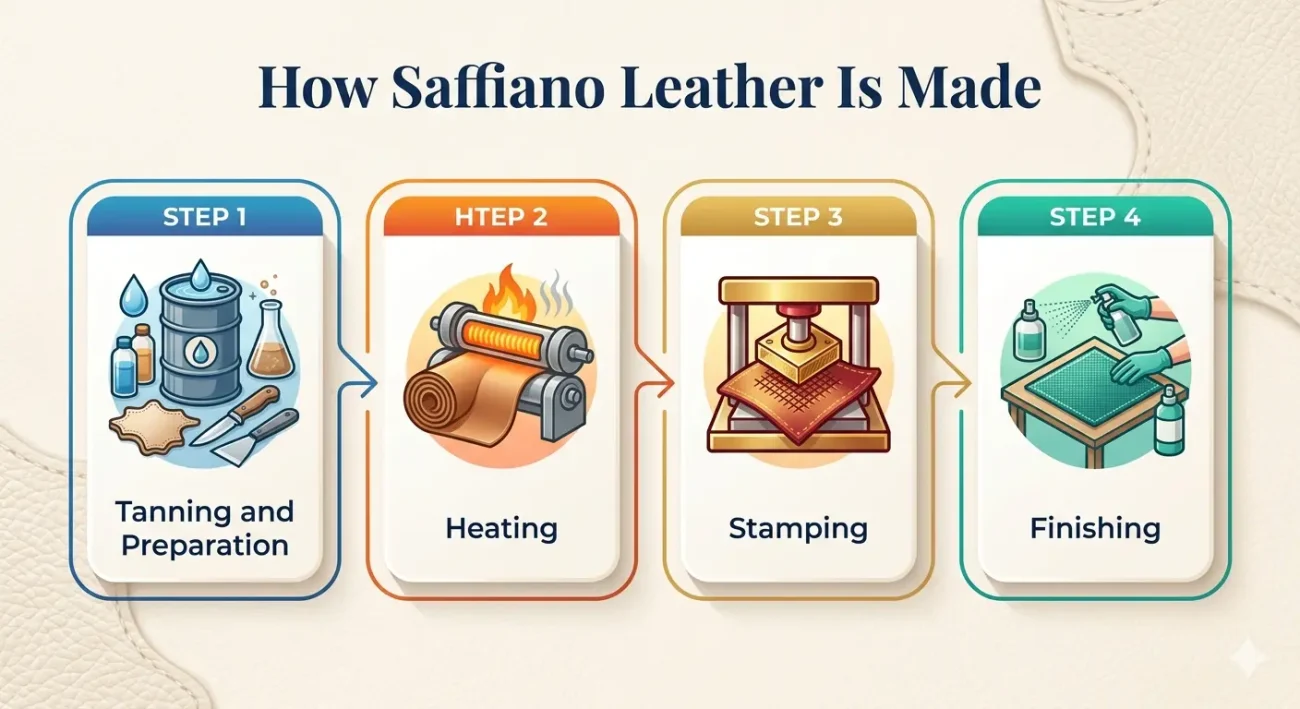
The production of Saffiano leather follows four steps. The machinery and conditions required are more controlled than most other leather finishing methods.
Step 1: Tanning and Preparation
The hide is tanned to stabilize its structure. Chrome tanning is the most common method for Saffiano production because it produces consistent, uniform leather that responds well to stamping.
Some manufacturers use vegetable tanning, which produces a firmer base and carries a lower environmental footprint.
After tanning, the hide is dyed to a solid base colour to ensure uniformity beneath the finish.
Step 2: Heating
The hide is heated to approximately 70°C. This loosens the leather fibres and makes them receptive to the embossing pressure that follows. Cold leather resists the stamp and produces an uneven, shallow pattern that loses its definition quickly.
Step 3: Stamping
A machine with engraved metal plates presses the crosshatch pattern into the heated leather under high pressure for approximately 10 to 15 seconds.
The plates use a mirror image of the pattern. The result is a uniform, geometric crosshatch across the entire surface with consistent depth.
Step 4: Finishing
A protective wax or synthetic resin finish is applied after the leather cools. This coat creates the semi-gloss sheen, seals the surface against moisture and staining, and provides the scratch resistance the material is known for.
To learn more, you can read our comprehensive guide on how Saffiano leather is made.
Is Saffiano Leather Real Leather and Why Is It So Expensive?
For anyone wondering: Is Saffiano Leather Real?, there are two repeated questions.
Is it real leather?
Authentic Saffiano starts with a genuine animal hide, most commonly calfskin or cowhide. The stamping and wax finish are applied to real leather. Many products sold as Saffiano, however, use PU or PVC as the base with no genuine hide underneath.
To verify authenticity, check the product description for calfskin, full-grain, or top-grain as the base material. If the description only says “Saffiano-style” or “Saffiano texture,” the base is likely synthetic.
Why is it expensive?
The cost reflects three factors: high-quality calfskin is an expensive raw material; the stamping machinery requires significant capital investment; and the precision required in heating, pressing, and finishing adds skilled labour time to every hide.
According to a 2021 report by McKinsey & Company, 57% of consumers are willing to pay higher prices for products made from high-quality materials, which is exactly the market that genuine Saffiano leather serves.
Saffiano Leather Texture and Pattern Explained
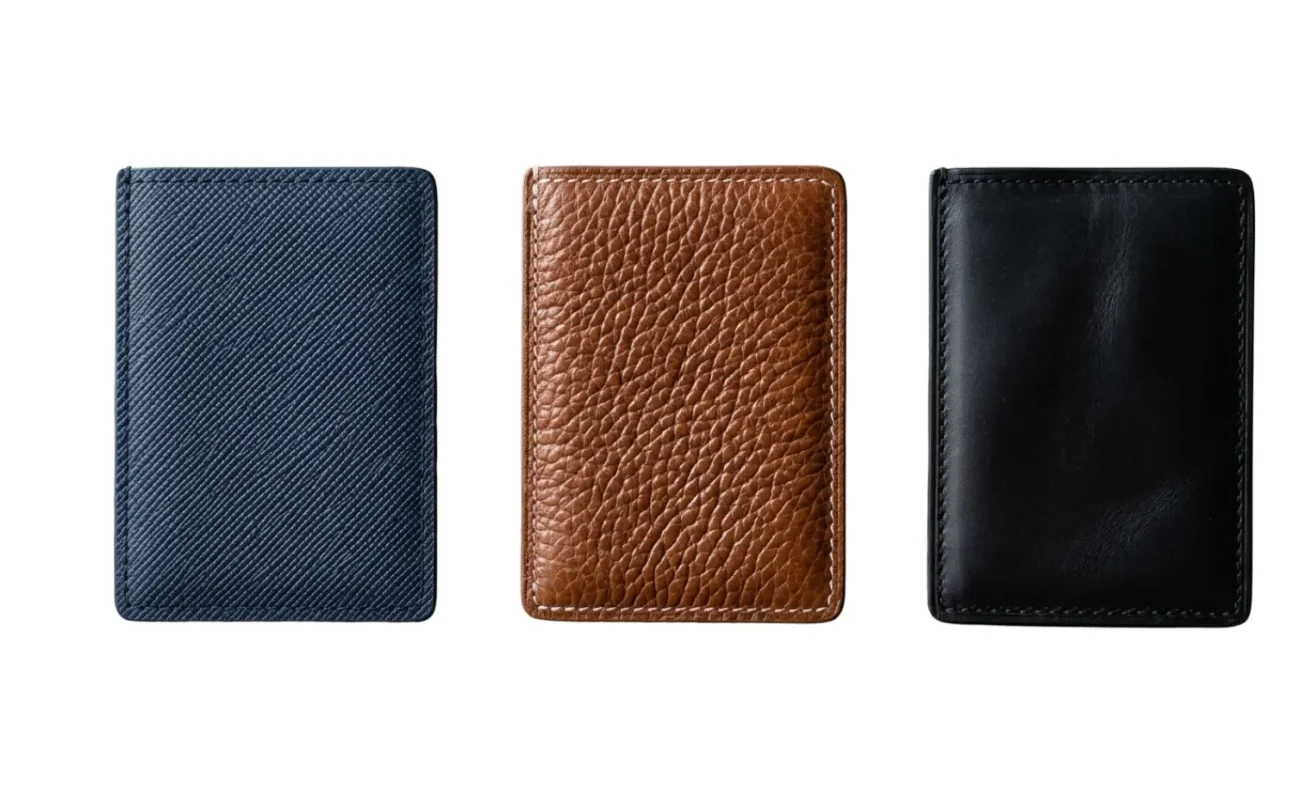
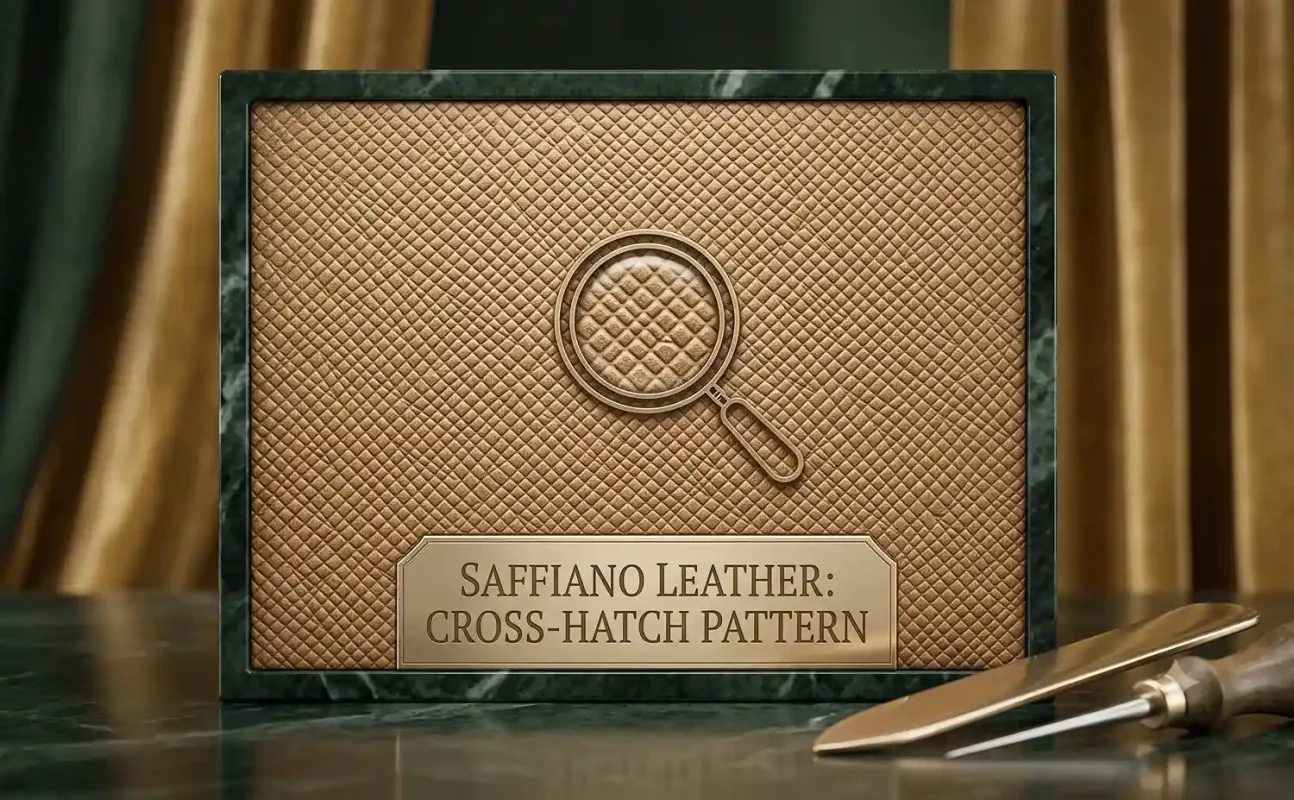
The Saffiano texture is produced entirely by the stamping machine. It is not a natural grain. The pattern consists of fine diagonal lines pressed in two directions, creating a precise symmetric crosshatch across the surface.
The ridges deflect scratches rather than absorbing them. A key dragged across smooth leather leaves a visible mark. The same action across Saffiano tends to glide over the ridges with less surface damage because the impact is distributed across the pattern geometry.
The wax finish produces a semi-gloss surface between matte and patent leather. The feel is firm and structured, noticeably stiffer than natural grain or pebbled leather. This rigidity helps Saffiano products hold their shape without internal reinforcement.
Colours appear more saturated on Saffiano than on most other leather types. The consistent wax coat produces vibrant, even colour across the entire surface. This is why Saffiano wallets and bags are available in a wider range of colours than most natural leather products.
Saffiano Leather Durability
Durability is the main reason Saffiano leather became a standard material in structured accessories. The embossed pattern and wax finish protect against the three most common forms of leather damage.
- Scratch resistance: The crosshatch ridges distribute impact across a larger surface area. Scratches are harder to produce and less visible when they occur because the geometry of the pattern partially conceals surface marks.
- Water resistance: The wax finish causes water to bead on the surface. Everyday exposure to rain and spills poses no significant risk. The leather beneath is protected as long as the finish remains intact. Saffiano is not waterproof and should not be submerged.
- Stain resistance: The sealed surface prevents oils, ink, and most liquids from penetrating. Most stains wipe clean with a damp cloth without leaving residue.
For an original leather wallet for men used daily, these properties matter directly. A wallet sits in a pocket alongside coins, receipts, and keys. Saffiano handles this environment without visible degradation over years of use.
One important limitation: Saffiano does not develop a patina. Unlike vegetable-tanned leather that darkens and softens with use, Saffiano maintains its original appearance until the finish degrades. It wears out rather than ages with character.
What Is Saffiano Leather Used For?
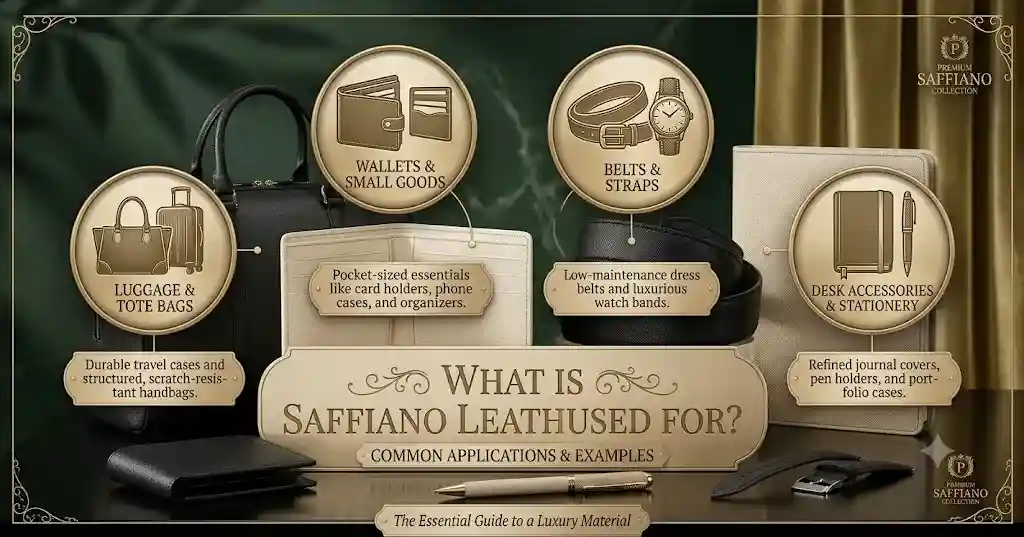
The practical properties of Saffiano leather make it suitable for any accessory that requires frequent handling, structured shape, and low maintenance. Common applications include:
- Wallets and card holders, where scratch resistance and structure matter for daily pocket use. A mens card holder wallet in Saffiano holds its shape and finish under constant friction from pockets and bags.
- Briefcases and laptop bags, where rigidity helps the product maintain its form without collapsing under the weight of contents.
- Handbags and totes, where the water-resistant finish handles outdoor exposure and the structured surface resists the scuffs that come with daily carry.
- Travel accessories including passport holders, luggage tags, and travel wallets, where durability across varied conditions is essential.
- Watch straps, phone cases, and small accessories where the crosshatch pattern provides grip and the wax finish handles moisture from skin contact.
- The common thread across all these applications is that Saffiano performs where smooth leather shows wear quickly.
Saffiano Leather vs Genuine Leather: Which Is Better?
A clear comparison between Saffiano Leather vs Genuine Leather reveals key differences in texture, durability, maintenance, and long-term appearance.
| Property | Saffiano Leather | Vegetable-Tanned Leather | Full-Grain Natural Leather |
| Texture | Rigid, structured crosshatch | Firm, softens over time | Smooth, supple |
| Scratch resistance | High | Medium | Low to medium |
| Water resistance | High | Low | Low |
| Patina development | None | Rich patina over years | Develops patina |
| Maintenance | Damp cloth only | Regular conditioning | Regular conditioning |
| Feel | Firm, structured | Warm, organic | Warm, natural |
| Smell | Minimal, waxy | Rich, earthy | Rich, earthy |
| Best for | High-wear structured accessories | Everyday wallets and bags | Premium fashion items |
Saffiano leather is the better choice for buyers who want low maintenance, consistent appearance, and resistance to daily wear. Natural grain leather is the better choice for buyers who want a product that develops character over years of use.
For a leather billfold wallet mens product used daily, Saffiano outperforms most unfinished leather types in practical durability. For a wallet treated as a long-term investment piece that ages with the owner, full-grain vegetable-tanned leather offers qualities Saffiano cannot replicate.
Saffiano Leather vs Pebbled Leather
Both Saffiano and pebbled leather have textured surfaces, but they get there in completely different ways and produce different results in use.
Saffiano’s crosshatch pattern is stamped mechanically under heat and pressure. The result is a rigid, precise, geometric texture that is identical across every piece.
Pebbled leather gets its texture by tumbling the hide in a large drum, which causes the grain to raise naturally. The result is soft, irregular bumps that vary from piece to piece. Pebbled leather is flexible and supple; Saffiano is stiff and structured.
In practical terms: Saffiano is better for structured accessories like wallets and briefcases that need to hold their shape. Pebbled leather is better for soft bags and accessories where flexibility is a feature.
Both are more durable than smooth leather in resisting surface marks, but Saffiano provides stronger water resistance due to its wax finish.
Pros and Cons of Saffiano Leather
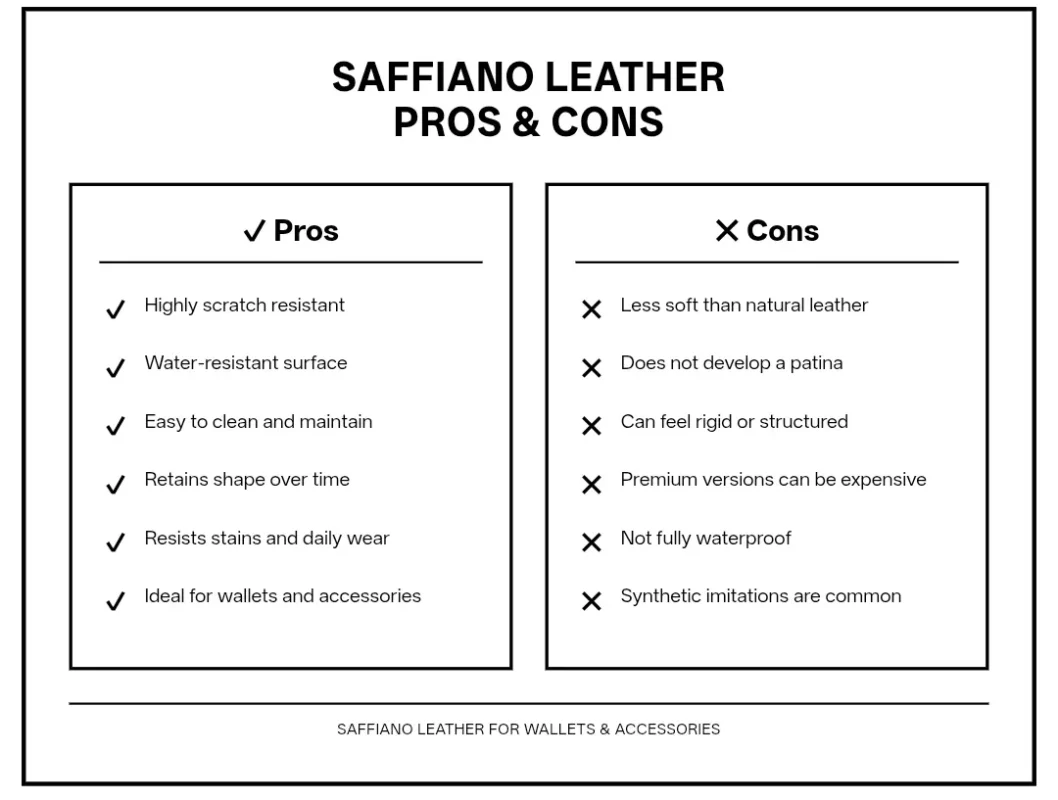
Understanding the Pros and Cons of Saffiano Leather helps buyers choose durable, stylish, and low-maintenance material for wallets and accessories.
Pros
- Exceptional scratch resistance: The crosshatch pattern deflects surface damage. Daily pocket use with keys and coins produces far less visible wear than on smooth leather.
- Water and stain resistance: The sealed wax surface repels liquids under normal conditions. Spills wipe clean in seconds without penetrating the leather.
- Zero maintenance: No conditioning, no special products, no regular treatment required. A damp cloth handles all routine cleaning.
- Structural integrity: The rigid character of Saffiano helps accessories hold their shape over years of use. A branded wallet for men made from Saffiano will not sag or deform with a full card load.
- Colour consistency: The wax finish produces vibrant, saturated colours that stay stable without fading or uneven patches.
Cons
- No patina: Saffiano does not age with character. It maintains its original appearance until the finish degrades, then simply wears out.
- Synthetic feel: The wax coating reduces the warm, tactile quality associated with natural leather. Some buyers find the feel closer to hard plastic than to hide.
- Hidden grain: The stamping process completely covers the original character of the hide. Every piece looks identical regardless of what’s underneath.
- Difficult to repair: Deep scratches or cracks in the finish cannot be buffed out or reconditioned at home. Professional restoration is required.
- Peeling risk in low-quality versions: Thin plastic coatings over split leather bases begin to flake at the edges and corners within months of daily use. Genuine calfskin Saffiano does not peel under normal conditions.
Saffiano Leather Care: Dos and Don’ts
| Dos | Don’ts |
| Wipe regularly with a soft damp cloth | Do not apply leather conditioner |
| Use mild soap for stubborn marks, wipe clean after | Do not use alcohol-based or chemical cleaners |
| Store in a dust bag when not in use | Do not use abrasive sponges or rough cloths |
| Pat dry immediately after rain exposure | Do not apply waterproofing sprays |
| Keep away from direct sunlight for extended periods | Do not store with sharp objects pressing against the surface |
| For scratches, use matching acrylic paint applied with a fine tip | Do not attempt to buff or sand deep scratches at home |
The reason conditioner is excluded is specific: the wax finish prevents any product from penetrating the surface. Conditioner applied to Saffiano sits on top and creates a sticky residue that attracts dust.
Learn the best cleaning methods, storage tips, and common mistakes to avoid in our complete guide on Saffiano Leather Care: Dos and Don’ts.
Environmental Impact of Saffiano Leather Production
The leather industry sources approximately 90% of its hides as by-products of the meat industry. This is an important context: the hides would otherwise be discarded, making leather a by-product use rather than a primary driver of animal farming.
The tanning process is the most significant environmental variable. Chrome tanning, common in Saffiano production, uses chromium salts that require careful waste treatment. According to a study published in 2020, vegetable-tanned leather has a 25% lower carbon footprint compared to chrome-tanned leather.
The wax and resin finish adds a layer of synthetic material to the leather surface. Products using PVC or PU bases add a higher petrochemical content to the overall footprint. Genuine calfskin Saffiano with a wax finish carries less synthetic content than PVC-based alternatives.
Some tanneries hold certification from the Leather Working Group (LWG), which rates manufacturers on environmental performance. Checking for LWG certification when buying any leather product is a meaningful indicator of responsible production.
How to Identify Genuine Saffiano Leather Quality
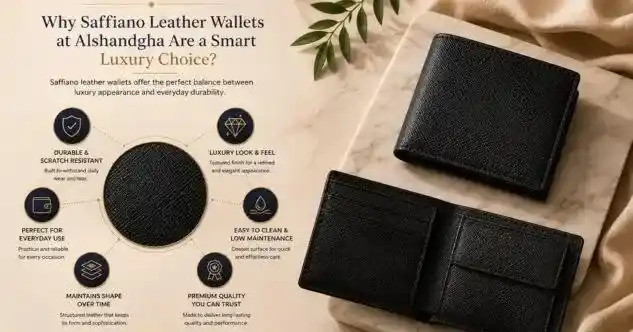
Not all Saffiano leather is equal, and the difference between grades shows quickly in daily use. These are the practical indicators of quality:
- The crosshatch pattern on genuine Saffiano is crisp and uniform with clearly defined ridges of consistent depth. On lower-quality versions, the pattern appears soft, irregular, or shallow.
- The surface should feel firm and structured, not flexible or pliable. Excessive flexibility suggests a thin plastic base rather than a genuine hide.
- The edges of a quality Saffiano product are finished cleanly. Budget versions often show raw or unfinished edges where the coating begins to separate from the base material.
- The smell of genuine Saffiano is minimal and slightly waxy. A strong chemical or plastic odour indicates a synthetic base.
- Press the sides of a mens card holder wallet gently between two fingers. Genuine Saffiano resists compression and springs back to shape. A synthetic version feels soft and may show edge creasing.
The Best Saffiano Leather Wallets for Men
The best Saffiano leather wallet is one built on a genuine calfskin base, not on a PVC or PU substrate. The difference becomes clear within months: genuine Saffiano holds its structure and finish for years, while synthetic versions begin to flake and peel at edges and corners under daily use.
Al Shandgha wallets are made from genuine Saffiano leather selected for base hide quality, not just surface appearance. Every original leather wallet for men in the Al Shandgha collection uses full crosshatch-stamped calfskin with a wax finish that handles daily pocket use without conditioning, without special treatment, and without losing its form.
The collection includes slim mens card holder wallet options for minimal carry, classic leather billfold wallet mens designs for full organization, and structured formats for the man who needs both cards and cash in a single clean profile.
Browse Al Shandgha Saffiano Leather Wallets
FAQs
Is Saffiano Leather Real Leather?
Yes. Saffiano is made from real leather, usually calfskin or cowhide, with a crosshatch texture stamped into the surface and protected by a wax finish.
Is Saffiano Leather a Luxury Material?
Yes. Authentic Saffiano leather is considered a luxury material due to its premium leather base, refined finish, durability, and widespread use in high-end accessories.
Is Saffiano Leather Better Than Normal Leather?
It depends. Saffiano offers better scratch and water resistance, while traditional full-grain leather provides a softer feel and develops a natural patina over time.
Is Saffiano Leather More Expensive?
Yes. Genuine Saffiano leather generally costs more than standard leather because of its high-quality hide, specialized finishing process, and long-lasting durability.
Is Saffiano Leather Durable?
Yes. Saffiano leather is highly durable and resistant to scratches, stains, and everyday wear, making it a popular choice for frequently used accessories.
Does Saffiano Leather Peel or Crack?
Genuine Saffiano leather does not usually peel or crack. Peeling is often associated with synthetic materials or low-quality products using artificial coatings.
Is Saffiano Leather Waterproof?
No. Saffiano leather is water-resistant, not waterproof. It handles light moisture well but can still be damaged by prolonged exposure to water.
Is Saffiano Leather Soft?
No. Saffiano leather has a firm, structured texture designed to maintain its shape rather than provide the soft feel of natural untreated leather.
How Can You Tell If Saffiano Leather Is Real?
Look for a sharp crosshatch pattern, firm texture, clean edges, and confirmation that the base material is genuine leather.
Does Saffiano Leather Develop a Patina?
No. Its protective finish prevents the natural aging process that creates patina, allowing the leather to retain a consistent appearance over time.